


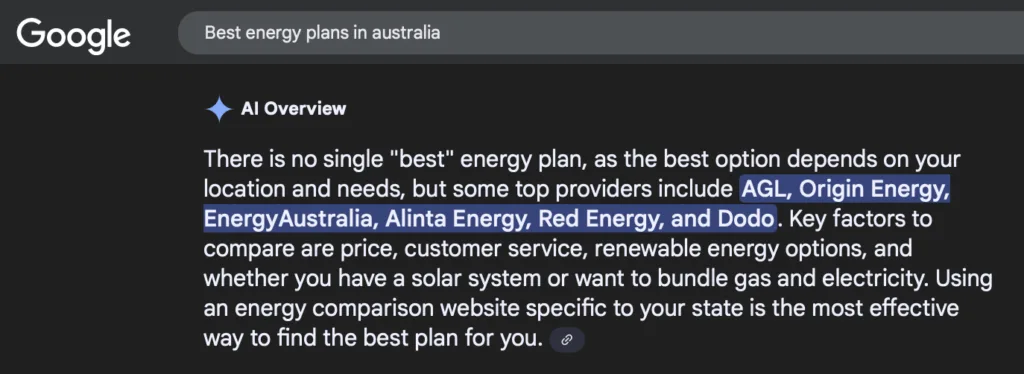
The integration of Generative AI within search results represents a structural shift in how users access information. This evolution directly impacts the traditional value exchange of digital marketing, where visibility on a search engine results page (SERP) was designed to generate clicks.
With AI-powered summaries often serving as the destination, the strategic focus must expand. It’s no longer just about ranking in a list of links; it’s about becoming an authoritative source within the generated answer itself.
This requires a strategy that pairs established Search Engine Optimisation (SEO) with the emerging discipline of Generative Engine Optimisation (GEO). Understanding how these two work together is now essential for building a resilient and forward-thinking digital strategy.
The Essential Foundation
Search Engine Optimisation remains the critical foundation of digital visibility. Its primary function is to align a website’s content and technical structure with search engine ranking algorithms, all with the goal of earning organic traffic from relevant user queries.
The core activities of SEO are well-established. They involve developing sophisticated keyword and topical strategies, building domain authority through backlinks, creating high-value content, and ensuring flawless technical performance. For years, these efforts have been focused on one primary outcome: winning the click.
These foundational elements are not diminished by the rise of AI. In fact, they now serve as the crucial signals of trust and credibility that Large Language Models (LLMs) rely on to form their answers. However, a strategy that ends with ranking on the SERP is no longer sufficient to guarantee visibility.
Unpacking GEO – The New Frontier
If SEO is about getting the algorithm to rank your website, GEO is about getting the AI to quote you. Generative Engine Optimisation is the practice of structuring and refining your content so that it’s not only discoverable but also easily understood, processed, and referenced by LLMs.
The goal of GEO isn’t to generate a click, but to achieve a citation. It’s about having your brand’s data, insights, and key messages woven directly into the AI-generated answer, positioning you as the authority in that moment of user need.
The tactics for GEO are more nuanced and focus on clarity and context:
- Answering Questions Directly: Structuring content in a clear, logical way that provides direct answers to specific user questions.
- Conversational Language: Aligning content with the natural, conversational queries users submit to AI interfaces.
- Structured Data and Schema: Using markup to explicitly label information, making it unambiguous for machines to interpret.
Demonstrating E-E-A-T: Heavily signalling your Experience, Expertise, Authoritativeness, and Trustworthiness through author bios, cited sources, and original data.
The Key Differences
While SEO and GEO are deeply connected, their operational focus differs significantly. Here is a simple breakdown of their distinctions:
| Factor | SEO | GEO |
|---|---|---|
| Primary Goal | Earn high rankings to generate clicks and website traffic. | Achieve inclusion and citation within AI-generated answers. |
| Target Audience | Search engine ranking algorithms and the end-user. | Large Language Models (LLMs) and their AI systems. |
| Core Metric | Keyword rankings, organic traffic, Click-Through Rate (CTR). | Brand mentions, citations, share of voice in AI answers. |
| Key Signals | Backlinks, keyword density, technical site performance. | Content clarity, structured data, demonstrated E-E-A-T. |
Better Together
GEO does not replace SEO; it builds directly on top of it. Attempting to optimise for generative AI without a strong SEO foundation is like trying to build a house with no slab. The two are symbiotic.
A strong SEO program is what gets your content noticed by LLMs in the first place. High rankings, a strong backlink profile, and a technically sound website are powerful indicators to an AI that your content is credible and authoritative. Google has already spent two decades determining which sites to trust; AI models will naturally leverage those same signals.
Once SEO has established that authority, GEO takes over. It refines and structures your content so the AI can easily parse and use it. For example, your SEO efforts might rank your article on “Best Cloud Storage for Australian Businesses.” Your GEO efforts would then structure that article with a clear comparison table, concise definitions, and an FAQ section that an AI can lift directly to answer a user’s query, citing you as the source.
A robust digital strategy integrates both. SEO builds the authority, and GEO makes that authority useful to AI.
This principle of strategic adaptation extends directly to paid search. In a world where AI-generated answers can satisfy user intent without a click, a sole reliance on traditional keyword bidding in the SERP becomes a riskier proposition. As AI absorbs more top-of-funnel queries, the landscape for classic text ads will inevitably change. This necessitates a thoughtful diversification of paid media strategies. A resilient approach involves rebalancing budgets to include full-funnel campaigns across channels like paid social, video, and programmatic display. It also means fully leveraging AI-driven campaign types, such as Performance Max, to engage customers across a broader digital ecosystem, ensuring your brand is present wherever the user’s journey takes them, well beyond the traditional search page.
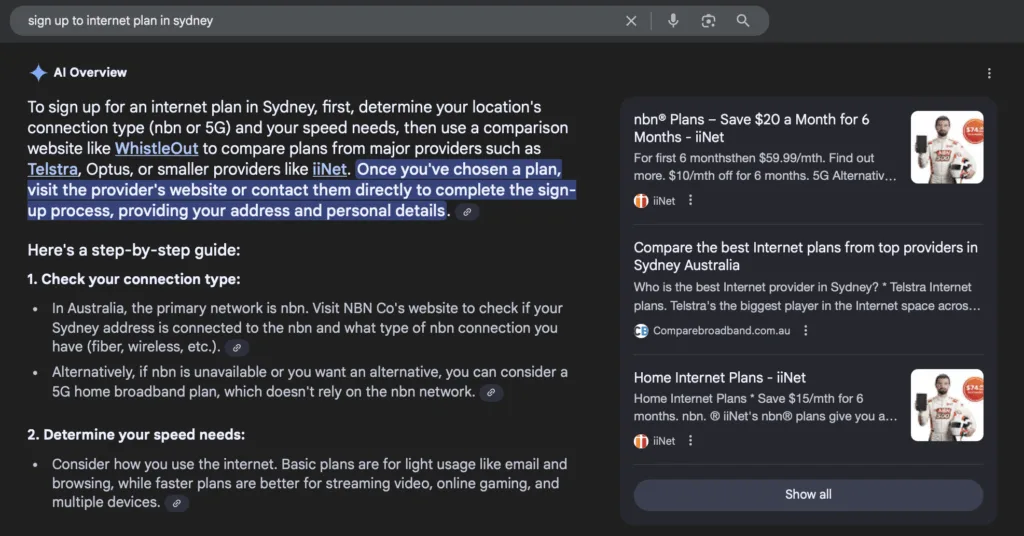
The emergence of generative AI in search is the most significant change to our industry in years. It demands an evolution in our thinking, moving beyond a pure focus on ranking to a more holistic view of digital authority and visibility.
Ignoring GEO is a risk that can lead to being rendered invisible as user behaviour continues to shift. The businesses that will win in this new era are those that understand the deep connection between their traditional SEO efforts and a forward-thinking GEO strategy. It’s about ensuring your brand is not only discoverable but is also the definitive answer to your customers’ most important questions, no matter how they ask them.