
What’s content marketing and why it’s important to your business

Bianca Hoare
Digital Media Lead
April 17, 2026

Content marketing has evolved from a ‘nice-to-have’ digital tactic into the heartbeat of modern business growth. It’s the (not-so-secret) tool that allows businesses to be seen within an environment where the user can simply skip, block, or ignore content that’s put directly in front of them.
But what exactly is content marketing, and why should businesses, like yourself, invest in it instead of just buying more ads?
What is content marketing?
Content marketing is a strategic approach focused on creating and distributing valuable, relevant, and consistent content to attract and retain a clearly defined audience – an audience that’s relevant to your business, brand and values.
But unlike traditional advertising, which interrupts your audience to sell a product, content marketing solves problems in a bid to earn trust.
Why content marketing is important to your business
These days, the digital landscape is filled with AI-generated noise, making trust between an audience and a brand harder to come by. But this is where content marketing fills the gap.
Content marketing allows you to build high-quality, human-led content, which is more valuable than ever – making it one of the highest ROI activity for most businesses,
1. Content marketing builds authority
Paid ads stop working the second you stop paying. Content marketing is an asset. A well-written article or a helpful video can drive traffic and leads for years after it is published.
Companies with active blogs generate 68% more leads than those without.
Source: Hubspot
2. It fuels your SEO and discoverability
Search engines (and new AI search engines like ChatGPT, Claude or Gemini) crave fresh, authoritative information. By answering the questions your audience is asking, you increase your chances of appearing at the top of search results or being cited or mentioned within AI extracts, which is exactly when a customer is looking for a solution.
3. It helps establish trust
In 2026, Google and consumers alike look for Experience, Expertise, Authoritativeness, and Trustworthiness (E-E-A-T). When you provide helpful, authoritative content, you position your business as the ‘helpful expert’. By the time a customer is ready to buy, invest or sign up, they simply don’t need to be sold as the trust between your brand and themselves has already been established.
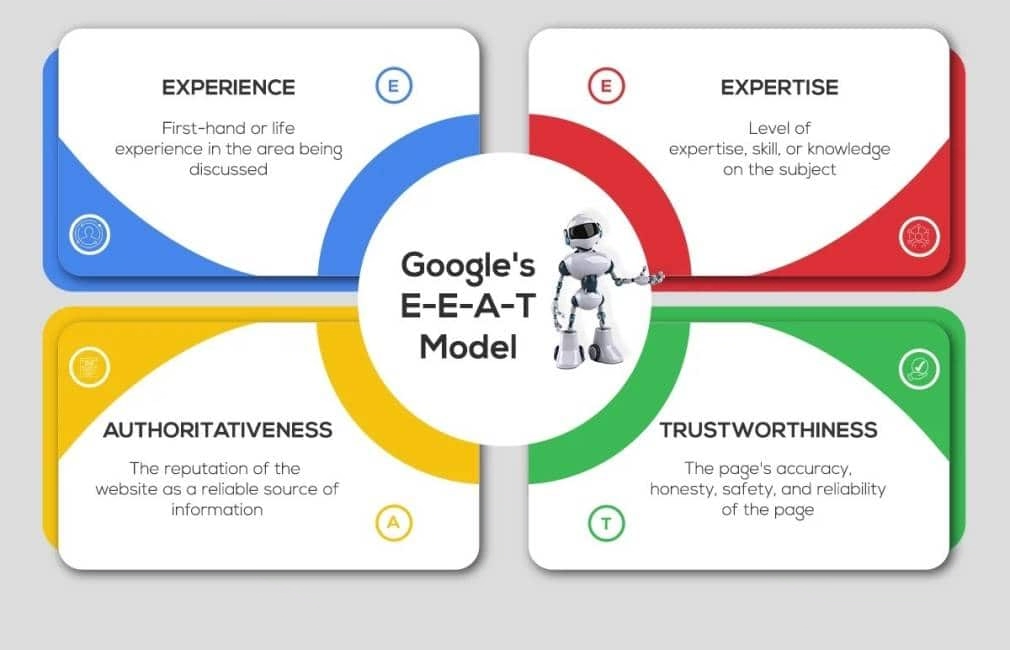
But trust is built in a number of ways:
- Prioritise E-E-A-T:
- Show, don’t just tell. Use real-world examples and case studies.
- Use author bylines and don’t publish “by Admin“. Use real names of experts in your company with links to their LinkedIn profiles or professional bios.
- Lead with transparency:
- Disclosure everything. Clearly label sponsored content or affiliate links.
- Own your mistakes. If you publish a stat that changes or makes an error, issue a visible correction. It shows you value accuracy over ego.
- Use data and primary research:
- Cite sources by linking to reputable studies, government data, or academic journals.
- Use original data. Conduct your own surveys where you can, or analyse your own internal data to provide insights.
- Focus on education over promotion:
- 80% educational content that solves problems, teaches a skill, or provides value with no strings attached.
- 20% promotional content that explains your product or service.
- Leverage social proof:
- Utilise User-Generated Content (UGC) that features photos or videos of real customers using your product or service.
- Embed third-party reviews (like Trustpilot or Google Reviews) that showcase testimonials and reviews directly into your content.
- Have certifications, awards, security badges, or professional memberships on display.
4. Content supports the entire journey
It’s important to always remember that not everyone is ready to buy immediately. And these days, everyone goes through different steps and avenues before they make a decision. This is why content is a powerful tool, especially in the digital landscape because it allows you to meet customers where they are.
- Awareness: Helping them identify a problem.
- Consideration: Showing them different ways to solve that problem.
Decision: Proving why your product or service is the best choice to solve that problem with the use of case studies and testimonials.
Content marketing trends to keep an eye on in 2026
Starting off in content marketing doesn’t need to feel daunting. If you’re kicking off your content marketing journey, keep these ‘new rules’ in mind:
| Trend | What it means | Why it matters |
|---|---|---|
| Personalised AI | Using AI to tailor content to specific user personas. | Increases engagement by making content feel personal and tailored to individual needs, wants and desires. |
| Video-first | Prioritising short-form video for social discovery. | Video is currently the number 1 way Gen Z and Millennials discover brands, especially across social media. |
| The human moat | Double down on original research and unique opinions. | AI can summarise facts, but it can’t replicate your unique business insights, brand tone of voice, values and personality. |
How to get started
You don’t need a big media content team to begin. You can simply start by identifying the top 10 questions your customers ask your sales or support team. Answer those questions in depth through a blog or a short video series.
And remember, the goal is simple: stop being a company that sells, and start being a resource that truly helps solve problems.